
Why Quizzes Are Important for Students: 8 Benefits of Quiz-Based Learning
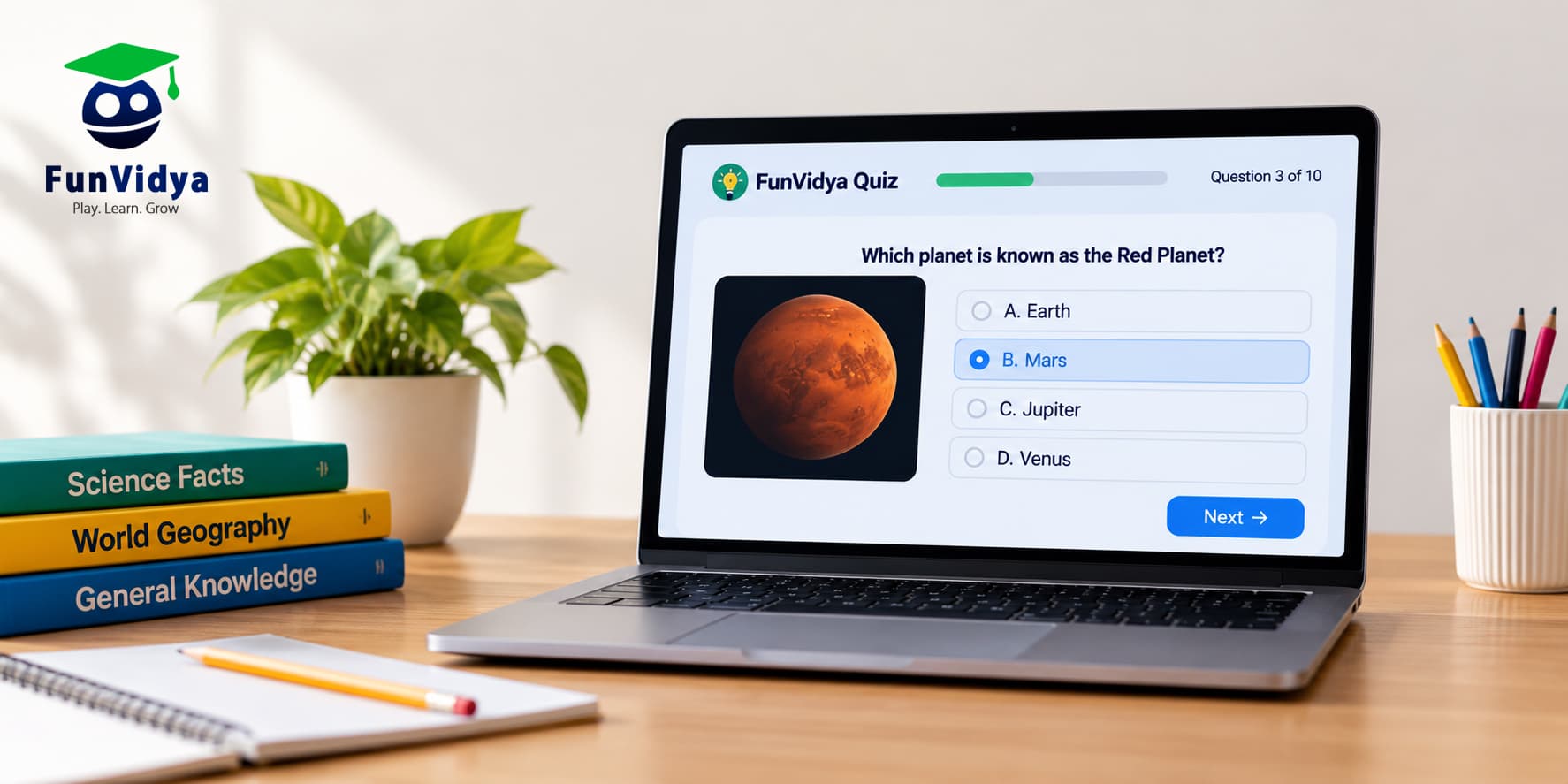
Learning is not just about reading books, attending classes, or completing homework. Students also need opportunities to check what they have learned and understand how well they can use that knowledge.
This is where quizzes can help.
Quizzes are a simple and engaging way for students to test their knowledge, recall information, and discover new things. They can be used in classrooms, at home, or even as a fun activity with friends and family.
The best part is that quizzes don't always have to feel like exams. When designed well, they can make learning more interesting and encourage students to keep improving.
Let's explore 8 important benefits of quizzes for students and how quiz-based learning can make a difference.
1. Quizzes Help Students Remember What They Learn
Have you ever studied something and forgotten it a few days later?
This happens to many students. Reading the same information again and again does not always mean we will remember it for a long time.
Quizzes give students a chance to recall information from memory. For example, after learning about the human body, a student can answer questions about the heart, lungs, or brain.
Trying to remember an answer helps students practise recalling what they have learned.
When students revisit a topic through quizzes over time, it can also help them remember important information for longer.
Example: After studying the solar system, a student takes a short quiz about planets. Answering questions helps them review the topic and identify what they still need to practise.
2. Quizzes Help Students Find Their Learning Gaps
Sometimes, students feel they understand a topic until they try to answer questions about it.
A quiz can help them discover which parts they know well and which parts need more attention.
For example, a student may understand most of a science chapter but struggle with questions about electricity. Instead of studying the entire chapter again, they can focus more on that topic.
This makes learning more focused and helps students use their study time better.
Quizzes can also help teachers and parents understand where a child may need additional support.
Remember: Getting an answer wrong is not a failure. It is an opportunity to learn something new.
3. Quizzes Make Learning More Interesting
Studying from books is important, but doing the same thing every day can sometimes feel boring.
Quizzes add variety to learning. They can include multiple-choice questions, picture-based questions, riddles, puzzles, and real-life situations.
For example, instead of simply reading about traffic rules, children can answer questions about what they should do at a red light or how to cross a road safely.
These activities encourage students to participate actively instead of just reading or listening.
When learning feels enjoyable, students may become more interested in exploring a subject further.
4. Quizzes Build Confidence
Some students know the answers but feel nervous about sharing them. Others may hesitate because they are afraid of making mistakes.
Quizzes can provide a comfortable way to practise answering questions.
Starting with simple questions and gradually moving to more challenging ones can help students recognise their progress.
For example, a child who answers a few general knowledge questions correctly may feel encouraged to try a more difficult quiz next time.
Even when students get answers wrong, helpful feedback can show them what to improve.
The goal should not be to make every student score full marks. It should be to help them become more comfortable with learning, trying, and improving.
5. Quizzes Improve Thinking and Problem-Solving Skills
Not every quiz question can be answered by memorising facts.
Some questions ask students to compare information, find patterns, solve problems, or choose the best action in a situation.
For example:
"What would happen if there were no traffic signals on busy roads?"
"Which material would be best for keeping water cold?"
"How could you save water at home?"
Questions like these encourage children to think about what they know and apply it to different situations.
Scenario-based quizzes are especially useful because they connect learning with everyday life.
They encourage students to think beyond textbooks and consider how knowledge can help them solve real-world problems.
6. Quizzes Help Students Learn at Their Own Pace
Every child learns differently.
Some students understand a topic quickly, while others need more time and practice. Quizzes can help students recognise their own progress without always comparing themselves with others.
A student can begin with easy questions, review mistakes, and then try a more challenging set.
Online quizzes can make this process even more convenient. Students can practise from home, explore different topics, and learn at a time that suits them.
Parents can also use short quizzes to understand which subjects interest their children and where they may need more practice.
The important thing is to focus on improvement rather than expecting every child to learn at the same speed.
7. Quizzes Encourage Healthy Competition
A little friendly competition can make learning more exciting.
Students may enjoy challenging themselves, solving questions with friends, or taking part in a school quiz competition.
Healthy competition can encourage students to prepare, practise, and explore topics they may not have studied before.
For example, a quiz about countries and capitals may inspire children to learn more about geography. A science quiz may encourage them to explore how everyday things work.
However, competition should remain friendly and positive. Students should not feel embarrassed or discouraged because they score fewer points than others.
The real goal is to learn more today than you knew yesterday.
8. Quizzes Help Students Become Independent Learners
One of the most useful habits a student can develop is taking responsibility for their own learning.
Quizzes can help students understand what they know, recognise what they need to improve, and decide what to study next.
For example, after completing a quiz, a student can review incorrect answers, read about those topics, and attempt similar questions again.
This simple process encourages students to take an active role in their learning.
Over time, they may become better at identifying their strengths, working on their weaknesses, and preparing for exams or other challenges.
Learning becomes more than just completing assignments. It becomes a process of continuous improvement.
How Can Parents and Teachers Use Quizzes Effectively?
Quizzes can be useful at different stages of learning, but how they are used matters.
Here are some simple ways parents and teachers can make quizzes more effective:
- Start with simple questions: Help children feel comfortable before introducing difficult topics.
- Choose interesting topics: Use subjects that match children's age, interests, and learning level.
- Explain the answers: Don't just show the score. Help children understand why an answer is correct or incorrect.
- Encourage learning from mistakes: Remind students that wrong answers are part of the learning process.
- Use quizzes regularly: Short quizzes after studying a topic can help students review what they have learned.
- Focus on progress: Celebrate improvement, effort, and curiosity instead of only high scores.
- Make quizzes fun: Include interesting facts, puzzles, pictures, and real-life situations wherever appropriate.
A good quiz should help students learn, not simply test what they already know.
Quizzes Are More Than Just Exams
When people hear the word "quiz," they often think about school exams, marks, and competition.
But quizzes can be much more than that.
They can help children discover interesting facts, explore new subjects, challenge their thinking, and learn from their mistakes.
A quiz about animals can introduce children to wildlife. A geography quiz can help them discover new countries. A science quiz can make them curious about everyday things.
The possibilities are endless when questions are designed to encourage learning and exploration.
At FunVidya, we believe quizzes can make learning more interactive and enjoyable. By combining knowledge with interesting questions and real-life situations, we aim to give students more opportunities to learn, think, and grow.
How to Make Quizzes a Part of Everyday Learning
You don't need to wait for an exam or a school competition to start using quizzes.
Parents can ask a few fun questions during family time. Teachers can begin a lesson with a short quiz to understand what students already know. Students can also challenge themselves with questions after completing a chapter.
Here are a few easy ideas:
- Ask five questions about a topic your child studied today.
- Play a general knowledge quiz during family time.
- Use a science quiz to explore everyday mysteries.
- Try a geography quiz to discover new countries.
- Discuss the answers together and explore any interesting questions further.
Even a short quiz can create an opportunity to review knowledge and spark curiosity.
The aim is to make learning a regular habit without adding unnecessary pressure.
Final Thoughts
Quizzes are not just about getting the right answers or scoring more marks. They can help students remember information, identify learning gaps, build confidence, and develop important thinking skills.
When quizzes are interesting, age-appropriate, and supported by helpful feedback, they can become a valuable part of everyday learning.
So, the next time your child finishes a chapter, try asking a few questions instead of simply asking, "Have you finished studying?"
You may discover that a little quiz can lead to a lot of learning.
At FunVidya, we believe every question is an opportunity to learn something new.
Play. Learn. Grow.