
AI in Education: 8 Important Skills Every Child Needs for the Future
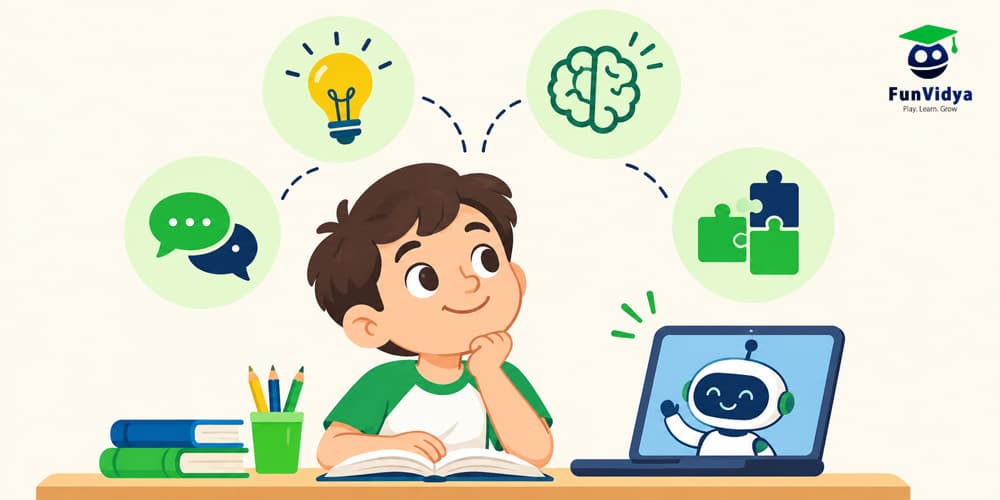
Artificial Intelligence (AI) is becoming a part of our everyday lives. From helping us find information to answering questions and completing tasks, AI is changing the way we learn and work.
Children growing up today will experience a world where AI plays an important role in many activities.
But does this mean children only need to learn how to use AI?
Not really.
Children also need to develop skills that help them think independently, solve problems, understand information, and make better decisions.
The good news is that these skills can be developed through everyday activities, conversations, games, and learning experiences.
Let's explore 8 important skills children need in the age of AI and how parents can help them develop these skills at home.
1. Critical Thinking: Learning to Think Beyond Answers
AI can provide answers to many questions within seconds.
But knowing an answer is not the same as understanding it.
Children need to learn how to think about information, ask questions, and decide whether something makes sense.
For example, if AI says that a particular animal lives in a certain habitat, children should learn to ask:
"Is this information correct?"
"Why does this animal live there?"
"Can I find another source to check this information?"
These questions encourage children to think instead of simply accepting everything they read or hear.
Parents can also encourage children to explain their answers and share how they reached a conclusion.
Example: If your child says that plants can grow without sunlight, ask them how they think that happens. Encourage them to explore the answer instead of immediately correcting them.
Critical thinking helps children become more careful, curious, and independent learners.
2. Creativity: Learning to Think of New Ideas
AI can help create stories, pictures, designs, and many other things.
However, children also need opportunities to imagine, experiment, and develop their own ideas.
Creativity is not just about drawing or painting. It also includes finding new ways to solve problems, making something different, and thinking about possibilities.
For example, a child can imagine a school where students learn through games, design a new board game, or create a story about a world without electricity.
These activities encourage children to explore ideas without always looking for one correct answer.
Parents can support creativity by giving children simple materials such as paper, building blocks, puzzles, or everyday objects.
Instead of showing them exactly what to make, ask:
"What else can you create with this?"
"Can you think of a different way to do it?"
"What would happen if you changed this idea?"
Remember: Creativity grows when children get the freedom to explore, experiment, and make their own choices.
3. Problem-Solving: Learning to Find Solutions
AI can suggest solutions to many problems.
But children still need to understand how problems work and how different solutions can affect the situation.
Problem-solving helps children think about challenges, identify possible solutions, and choose what may work best.
For example:
"What can you do if your school bag is too heavy?"
"How can you organise your study time when you have different subjects?"
"What would you do if your toy stopped working?"
Questions like these encourage children to think about everyday challenges.
They also help children understand that a problem may have more than one possible solution.
Parents can encourage problem-solving by allowing children to try different ideas before stepping in to help.
If a child is struggling with a puzzle, give them time to explore it.
You can ask:
"What have you tried so far?"
"Is there another way to solve it?"
"What could you change?"
These simple questions help children practise finding solutions instead of depending on someone else for every answer.
4. Communication: Learning to Express Ideas Clearly
In the age of AI, communication remains an important skill.
Children need to learn how to explain their thoughts, ask questions, listen carefully, and understand other people's ideas.
For example, a child may know the answer to a science question but struggle to explain it in simple words.
Practising communication can help them understand what they know and share it with others.
Parents can encourage children to explain things they have learned at school.
You can ask:
"Can you explain this topic to me?"
"What was the most interesting thing you learned today?"
"Why do you think this happens?"
These conversations give children opportunities to organise their thoughts and express themselves.
Playing board games, storytelling, group activities, and family discussions can also help children develop communication skills.
Example: After playing a quiz, ask your child to explain why they chose a particular answer. This encourages them to share their thinking instead of only saying whether the answer was correct.
Good communication helps children share ideas, work with others, and understand different points of view.
5. Digital Awareness: Learning to Use AI Responsibly
Children are growing up surrounded by digital tools.
They may use online videos, educational apps, websites, and AI tools for learning.
But using technology safely and responsibly is just as important as knowing how to use it.
Children need to understand that not everything they see online is correct.
AI can sometimes provide incorrect information, and online content may not always be suitable for children.
Parents can help children develop digital awareness by teaching them a few simple habits:
- Check information: Encourage children to verify important facts using reliable sources.
- Protect personal information: Teach them not to share private details online.
- Ask for help: Remind children to talk to a trusted adult if something online makes them uncomfortable.
- Use technology thoughtfully: Help them understand when a digital tool is useful and when they can do something without it.
- Understand AI limitations: Explain that AI can make mistakes and does not always understand things the way people do.
Children should also learn that AI-generated pictures, videos, and answers may not always show real information.
The goal is not to keep children away from technology completely.
It is to help them use technology with understanding, care, and responsibility.
6. Curiosity: Learning to Ask Better Questions
Curiosity is one of the most important habits children can develop.
Children naturally ask questions about the world around them.
Why does the Moon change its shape?
Why do some objects float in water?
How do birds know where to go?
AI can help answer these questions, but children should also learn to explore them further.
Instead of stopping after one answer, encourage them to ask more questions.
For example, if your child asks why ice floats in water, you can explore what happens when water freezes and how its properties change.
You can also encourage children to observe things around them.
A walk in the park, a visit to a market, or a simple activity at home can become an opportunity to discover something new.
Parents can support curiosity by:
- Encouraging children to ask questions.
- Exploring interesting topics together.
- Allowing children to experiment safely.
- Helping them find answers through books, activities, and reliable information.
- Avoiding the habit of dismissing questions as unimportant.
The more children explore, the more opportunities they get to learn something new.
7. Emotional Intelligence: Understanding Feelings and People
AI can help with many tasks, but understanding human feelings and relationships is an important part of growing up.
Children need to learn how to recognise their emotions, understand other people's feelings, and respond thoughtfully.
For example, a child may feel upset after losing a game.
Instead of reacting immediately, they can learn to understand why they feel disappointed and how to handle that feeling.
Parents can help children develop emotional intelligence through everyday conversations.
Ask questions such as:
"How did you feel when that happened?"
"Why do you think your friend was upset?"
"What could you do to help?"
These conversations help children understand emotions and think about how their actions affect others.
Playing games together can also provide opportunities to practise patience, sharing, teamwork, and handling disappointment.
Children should understand that making mistakes, losing sometimes, and feeling upset are normal parts of life.
The important thing is learning how to respond in a healthy way.
Emotional intelligence helps children build relationships, work with others, and understand themselves better.
8. Adaptability: Learning to Handle Change
The world is changing quickly.
New technologies, new tools, and new ways of working are becoming part of everyday life.
Children need to learn that they may not always have the same answers, methods, or opportunities in the future.
Adaptability means being willing to learn something new, try different approaches, and adjust when situations change.
For example, if a child is unable to solve a puzzle using one method, they can try another.
If a school project requires a different approach, they can learn to change their plan.
Parents can encourage adaptability by helping children:
- Try new activities and experiences.
- Accept that plans may sometimes change.
- Learn from mistakes instead of giving up.
- Explore different ways to solve a problem.
- Stay open to new ideas.
It is also important to help children understand that learning does not stop after completing school.
New skills and knowledge can be useful throughout life.
Children who are comfortable learning and adapting may find it easier to handle new challenges.
How Can Parents Help Children Develop These Skills?
Children do not need special classes or expensive tools to begin developing these skills.
Many everyday activities can provide opportunities for learning.
Here are some simple ways parents can support their children:
- Ask questions: Encourage children to explain their thoughts instead of always giving them the answers.
- Play learning games: Use puzzles, board games, quizzes, and activities that encourage thinking and problem-solving.
- Allow mistakes: Give children opportunities to try, learn, and improve without fear of being judged.
- Encourage independent thinking: Let children make small decisions and explain their choices.
- Explore technology together: Help children understand how AI and other digital tools work and where they can be useful.
- Make time for conversations: Discuss school, daily experiences, interesting facts, and new ideas.
- Focus on effort: Appreciate curiosity, practice, and improvement instead of only looking at marks or results.
Parents should remember that every child develops at a different pace.
The goal is not to develop every skill at once.
It is to create an environment where children feel comfortable asking questions, exploring ideas, and learning from experiences.
AI Can Support Learning, but Children Need to Think for Themselves
AI can be a useful learning tool.
It can explain difficult topics, provide examples, suggest activities, and help children explore subjects they find interesting.
For example, children can use AI to understand how the solar system works, learn new words, or get ideas for a school project.
But there is an important difference between using AI to learn and using AI to do all the thinking.
If children simply copy answers without understanding them, they may miss opportunities to develop their own skills.
Parents can encourage children to use AI in a thoughtful way.
Instead of asking AI to complete an entire assignment, children can use it to understand a difficult concept or explore different ideas.
They should also check important information and explain what they have learned in their own words.
AI should be treated as a tool that supports learning, not as a replacement for thinking, practising, and understanding.
How Learning Games Can Help Children Build Future Skills
Learning does not always have to happen through textbooks or screens.
Games can also provide opportunities for children to practise important skills.
Board games, puzzles, quizzes, and group activities can encourage children to think, make decisions, follow rules, and solve problems.
For example:
A strategy board game can encourage planning and decision-making.
A quiz can help children recall information and think about different answers.
A puzzle can encourage patience and problem-solving.
A group game can help children practise communication and teamwork.
These activities can make learning more interactive and enjoyable.
At FunVidya, we believe learning should encourage children to think, explore, and discover.
Through educational games and quizzes, we aim to create opportunities for children to learn new things while developing important skills.
Final Thoughts
AI is changing the way children learn, explore, and interact with the world.
But preparing children for the future is not just about teaching them how to use new technology.
It is also about helping them develop critical thinking, creativity, problem-solving, communication, digital awareness, curiosity, emotional intelligence, and adaptability.
These skills can help children understand information, make decisions, work with others, and handle new challenges.
Parents can support this learning through simple conversations, games, everyday activities, and opportunities to explore.
The goal is not to make children depend on AI for every answer.
It is to help them become confident learners who can think independently and use technology wisely.
At FunVidya, we believe every child deserves opportunities to learn, think, and grow.